


From college stardom at Kentucky and Gonzaga to playing in the NBA, EuroLeague, CBA, and now in Italy, Kyle Wiltjer has truly lived basketball on a global scale. A core piece of the Canadian national team, he’s competed at the highest levels across continents, gaining experiences few players can match.
In this interview with Premier Media, Wiltjer reflects on his college years, his NBA opportunity with the Houston Rockets, memorable stints in Greece, Spain, Turkey, and China, and his current chapter in Venice. He also shares lessons for young players chasing their own overseas dreams.
College Years
1. You had the chance to play college basketball at both Kentucky and Gonzaga — how would you describe those experiences, and what did each program teach you about the game?
Kentucky taught me many things in and out of basketball. In basketball, it really taught me what hard work really is. I thought I worked hard before getting there, but when I got there, I learned what that work really looked like. We were required to be in elite shape, compete at a high level everyday. There were no off days there. Late nights in the gym, then having to wake up early the next morning for conditioning, lifting, go to class, then practice against some of the best players in the country, challenged your body physically and mentally. But as I saw my game grow, it only ignited me to become a better player every year.
Gonzaga taught me what pressure was and was one of the reasons I chose to transfer there. At Kentucky, we had the next man up philosophy. This meant, if it wasn’t your night, to stay positive, because one of your brothers would lift you up and carry the team that night. This lifted a lot of pressure because you could still win a lot of games where you weren’t playing well. At Gonzaga, I had more responsibility being in a system that is catered around the bigs, so if you were having an off night, the team might struggle. This allowed me to carry the pressure of bigger moments, in more situations, and allowed me to become a more well rounded player. This pressure helped me mature as a player overall.

2. Looking back, how did those years prepare you for the professional level?
Kentucky really gave me the confidence to make the NBA because I was playing NBA players in practice everyday. In addition, I learned how to get my shot off against more athletic players and I learned how to fit in on arguably one of the most talented teams in college basketball history. It helped me become an expert in my role off the bench, having to come into high level games and make the first shot I took. Fast forward to NBA preseason, this is the exact role I was trying to make the team. It not only gave me confidence, I was able to make the team being an elite spot up shooter during the entire preseason.
Gonzaga helped me work on my game in other areas, like my post play, playmaking, and rebounding. This helped me become an overall more well rounded player going into my professional career overseas. Once I left the NBA, Europe challenges you to be a complete player. In Europe, I am asked to not only shoot spot up threes, but make plays out of the short role, post up mismatches, and make plays in a variety of different systems in different countries with unique coaches. It has helped me adapt to any given situation.

3. Even though you went undrafted, you still got a chance to play with the Houston Rockets — what stands out most from that time?
It was a blessing to go undrafted at that moment because my agent and I were able to sign with a team with a system that gave me the best chance to be successful. The Rockets just signed head coach Mike D’Antoni who had a system that was essentially a high pace offense that was centered on shots at either at the rim through pick and rolls or shooting a high volume of three point shots. They also just recently signed Ryan Anderson, one of my favorite stretch fours and NBA comparisons at the time, so I thought it would be a perfect place for me to thrive. Kind of like Kentucky, they had a bunch of great athletes and were looking to sign some shooting of those last couple roster spots, where you essentially would have to make the team through training camp and preseason.
4. How would you compare the NBA experience to playing overseas, both in terms of playing style and everyday lifestyle ?
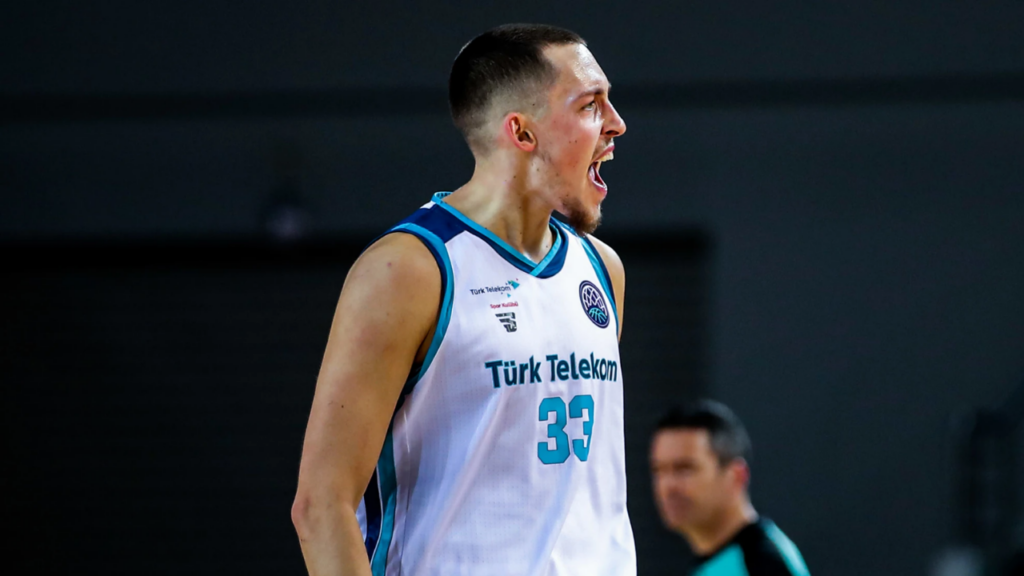
The NBA is changing much quicker than Europe. The game much more open because of the longer three point line, defense three second rule which leaves the lane open much more, and the game is less physical overall. There are also way more possessions so there is more room for mistakes. The game is moving toward position less play where a lot of players have the skills of guards and there are less bigs posting up.
In Europe, the game is shorter, the lane is most of the time occupied, so there is less room to work essentially on offense. The game is more physical overall, but you can’t put your hands on anyone or you will be called for a foul. Because the games mean so much more overall because of a shorter season, every possession is intensified. There is not a lot of room for mistakes at the highest levels. There is also still more traditional bigs, so there is a lot more post ups in Europe and exploiting mismatches is a huge emphasis down low.

Canadian National Team
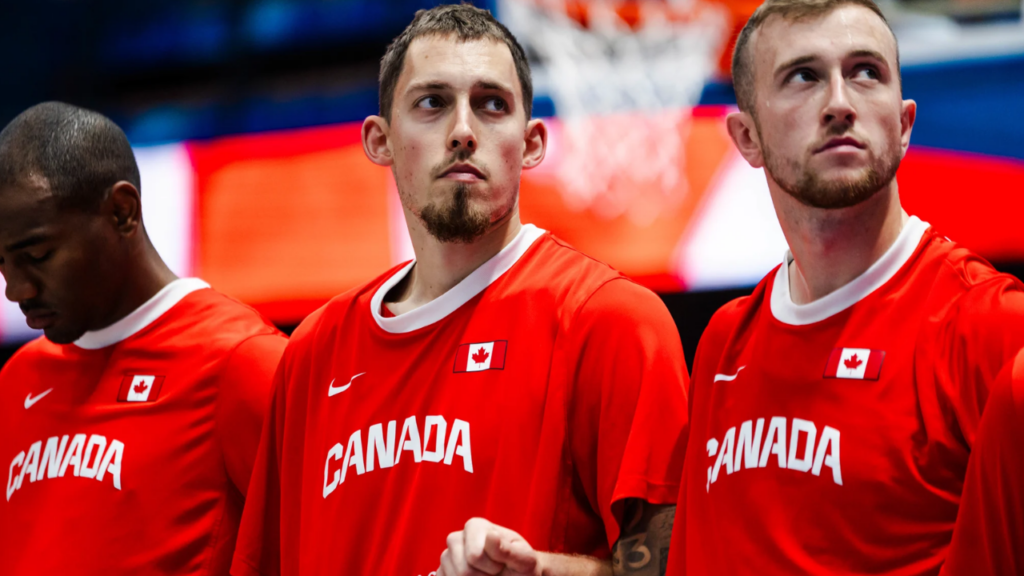
5. Right now you’re playing with the Canadian national team — what does representing your country mean to you, and how has that experience shaped your career?
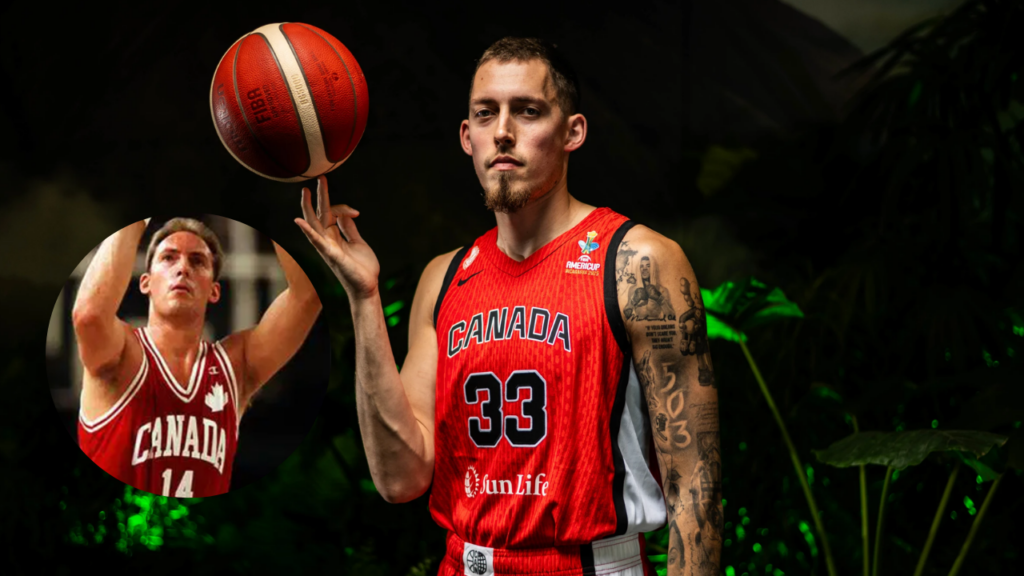
For me, it has been an honor because I was able to follow the same path that my dad did. He was just inducted into the Canadian hall of fame, so its an honor to share that same jersey that he did. It is also a great stage for me to show the world that I am still one of the best players at my position regardless of where I am playing. It has also helped me meet some amazing people along the way.
EuroLeague & Greece (Olympiacos)
6. You played for Olympiacos, one of Europe’s great basketball powerhouses. How would you describe that experience and the atmosphere in Greece?
Playing for Olympiacos was a great honor for me. It was my first jobs in Europe so I wasn’t acclimated to the game overseas yet but it allowed me to learn the game from one of the best four men to ever play in Europe, Printezis, and one of the all time greats, Spanoulis. It was an honor to play for the best fanbase in Europe.

7. How did you spend your days off the court in Greece, and which teammate did you compete against the most in practice?
I loved living in Athens, we were able to eat amazing food and relax at the beach on off days. I competed most the time with Printezis and Tillie, two very different four men who have had amazing careers in Europe. Learning and competing with them helped me mature as a player everyday.
Spain & Turkey
8. You’ve also played in Spain and Turkey — how would you compare the playing styles of those two leagues?
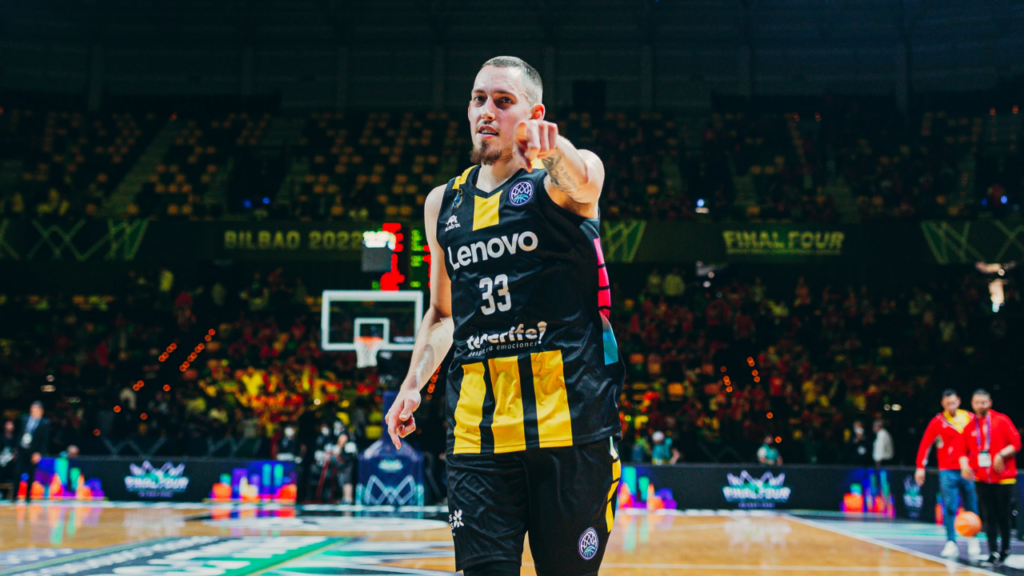
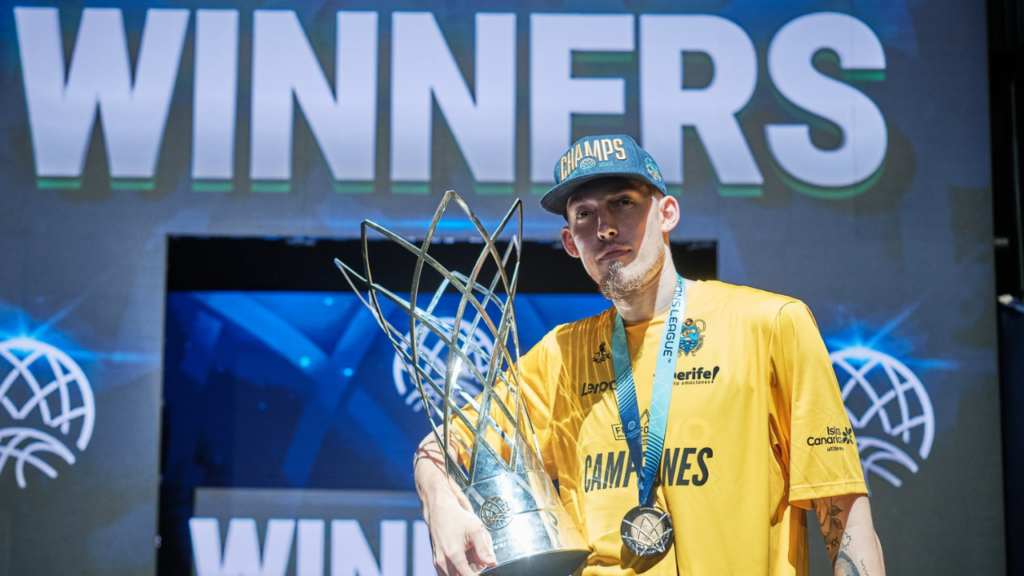
ACB is one of the best leagues in terms of execution and style of play in my opinion. The games are very well balanced, where players typically play from 20-23 minutes if you’re in the main rotation. While I was on Tenerife, it was one of the best teams I have ever played on, in terms of team centered basketball, everyone was fully bought in on a system where we moved the ball and also found the right solution through many variations of the same plays. We ended up winning Basketball Champions League which was one of my favorite professional memories.
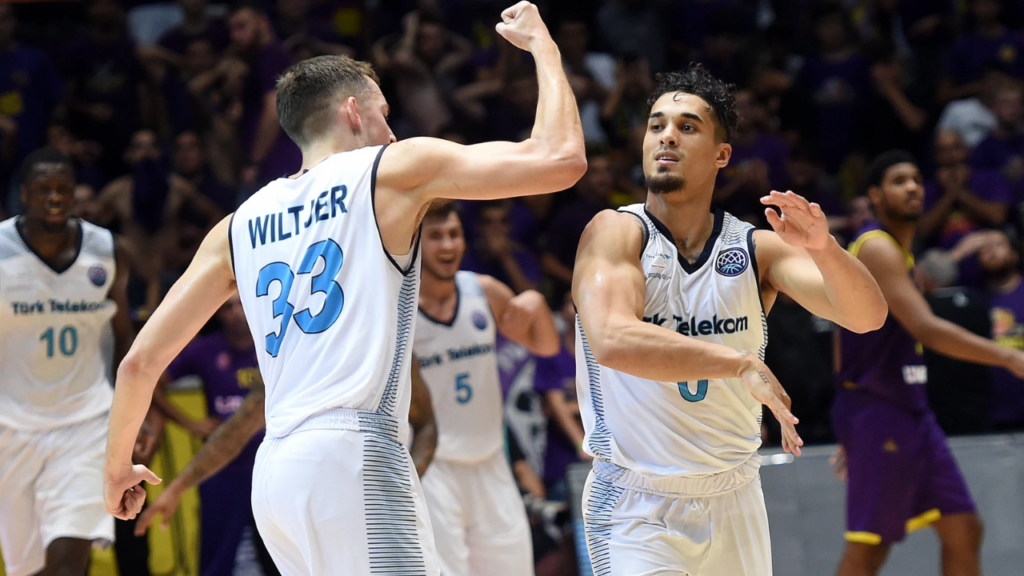
In Turkey, it is more centered on the American players, and I was averaging the most minutes of my career there, sometimes playing 35-38 minutes a game. It was a lot of fun to have this much freedom and play high paced offense.
9. Beyond basketball, how different were the cultural experiences in Spain and Turkey, and how did those environments impact you as a player?
I have been extremely lucky to play 10 seasons so far in many different environments and cultures, having played in Houston, Greece, Spain, Turkey, the Canary Islands, China, and Italy. These cultural experiences have allowed me to adapt to any situation as a player. More importantly, they are going to help me in my career once I finish playing. It has given me a unique perspective on the game, a sharp understanding of talent, and a deep appreciation for how culture and sport influence each other. I am super passionate about evaluating talent, building relationships and connecting people, and these combined experiences translate directly into the sports-marketing world, where understanding athletes, communities, and unique storytelling is essential to brand success. Growing up in Portland, Oregon, it has a dream of mine to work for Nike Sports Marketing, where I believe I can be a valuable asset because of the cultural experiences I have lived and played in. I haven’t started slowing down on the court yet, but I believe I will be ready for that transition because of all the amazing people I have been able to meet and learn from over the years.
China (CBA)
10. You also had time in China — what was the most surprising cultural experience for you there?
The most surprising cultural experience there was how advanced they were. In China, you cannot use your many different forms of payment that we have, everything is centralized, and for every thing you want to do is through one application, WeChat. You must be open minded because it is very different than how we grew up. In addition to this, because everything is in Chinese, you had to do most tasks through a translator. It just required more patience and being open minded, because once I learned how to move, I really enjoyed my experience there. The fans are unbelievable there as well, and are obsessed with baseball.
11. How would you describe the organization of the CBA and the structure of the teams compared to Europe or the NBA?
I would say its like the NBA in a sense that the game is a show. Of course we wanted to win as a team, but from the fans perspective, they are going to be entertained. They loved threes and dunks and a good show.
Comparing to Europe, it is different than most teams I’ve been on. In Europe, I have always been on a team that you have two games a week, one being the international competition, like Champions League, Eurocup, or Euroleague, and then the second game of the week being your domestic league, like ACB (Spanish league) or LBA (Italian league). In China, you’re just playing in your domestic league only. So it was different than my experience in Europe thus far.
Reflections & Preferences
12. Out of all the leagues and countries you’ve played in, which one do you recommend the most to young players and why?
This answer is truly different for every player. I would say instead of chasing the best league, I would recommend young players to go somewhere you fit in and where a coach will value you. Before signing, take a day or two to do your homework, call past players, find out about what type of system they play, talk to the coach and ask him what type of role he wants out of you. These type of questions will allow you to know what you are getting yourself into. The overseas seasons are 10 months and will be full of ups and downs, so doing what you can to know the details will help you stay positive and have less surprises along your journey. All leagues have different styles as well and often times have a first and second division. Signing on a lower team might be a greater investment in your future in the long run because you might be able to develop your game and play more your first year. Mike James did not go to Euroleague fresh out of college. He had to make a name for himself and grind out at lower level teams and that’s one of the biggest factors I respect him for. He had to literally grind to get where he is today. The last thing I would say no matter where you sign, always keep it moving, put in the work, and I truly believe things will work out for you. Plenty of places to play overseas to make a good living.
13. What stands out as your favorite overall memory from your overseas career so far?
Winning the basketball champions league with Lenovo Tenerife by far because there is no better feeling then raising a trophy. It makes the grind worth it, and at the end of the day, winning will elevate you quicker than just trying to score. Teams overseas value people with high character who are willing to do whatever it takes to win.
Current Chapter in Venice
14. You’re now playing in Venice, Italy — how do you like living in one of the most historic cities in the world, and what’s the experience been like so far on and off the court?
It has been a dream for me. I found a home where I have gotten to build on successes of the seasons prior. I haven’t had to start over each year, learning a new city, how to get to the gym, where is the grocery store, etc,. I have been able to gain the trust of my coach each year and build relationships with some amazing people around the city. Every year, I have been able to get more plugged in terms of the best restaurants and get anything I need to raise a family abroad. I am sending my two daughters who are 4 and 2 to Italian school, where they are learning Italian authentically, which is a gift that will last a lifetime to them. The team is building a new arena that should be done by the end of next year, and my dream is to be able to see this project through and earn a contract extension. I would love to be one of the most respected Americans who has played here not only on the court but off the court as well.
Advice & Perspective
15. Finally, what message would you give to young players — especially those who may not make it to the NBA but are determined to succeed overseas?
I would just say don’t get caught up where you end up. There are so many amazing league around the world, and even though some things may not go your way the entire time, if you put in the time and effort, you can make a great career for yourself. At whatever level you end up, just put your best foot forward, and grind. That grind will pay off in some shape or form and teach you many important lessons along the way. The Marathon Continues no matter if you’re still playing or slowly eyeing your new career like me after basketball, just keep going!!!
Kyle Wiltjer’s career captures the global reach of basketball. From the NCAA’s biggest stages to NBA arenas, EuroLeague battles, and international leagues in China, Spain, Turkey, and Italy, he’s seen and adapted to it all. Through every chapter, Wiltjer has carried himself as a professional and competitor, and his story provides invaluable lessons for the next generation of players aiming to carve out their own path in basketball.